Padel is celebrated globally for its social appeal and accessibility. For the adult beginner, the padel learning curve is notably gentle, making the sport immediately enjoyable. However, moving from simply hitting the ball to playing strategically effective matches requires a dedicated and efficient training approach. The adult beginner padel game-based training method offers the quickest pathway to competence, focusing on tactical intelligence over isolated technical perfection.
Unlike traditional sports instruction that relies on repetitive, monotonous drills, the padel game-based methodology integrates technical skill acquisition within realistic, match-like scenarios from the very first session. This ensures players learn not just how to execute a shot, but the critical skill of when and why to use it in the dynamic, doubles-focused environment of the padel court.
By prioritizing decision-making and real-game practice, this approach helps adult players rapidly accelerate their progress, move past the foundational stages, and quickly start enjoying the strategic depth of competitive play. This guide outlines the principles of this highly effective training style and offers practical padel adult progression tips for maximizing court time.
Why Adults Benefit from Situational Training
Adult learners typically seek efficiency and high engagement from a new sport. They value methods that quickly translate effort into functional playing ability. Padel, being primarily a tactical game of position, strategy, and teamwork, is an excellent candidate for this approach.
The Limitations of Isolated Drills
Standard sports coaching often relies on hitting hundreds of balls in succession to perfect one technique, such as the forehand volley. For the adult beginner, this approach presents challenges:
- Disconnection from Play: Perfecting a shot in isolation does not prepare a player for the chaos and pressure of a real point, where context and timing are paramount.
- Reduced Motivation: Monotonous repetition can quickly lead to boredom, reducing the student’s overall time commitment and enjoyment.
The Game-Based Solution for Progress
The padel game-based methodology resolves these issues by embedding all technical practice within a tactical framework. Every drill is a miniature match scenario, obligating players to consider:
- Positioning: Where should I be after I hit this ball?
- Partner Coordination: How does my partner’s position affect my shot choice?
- Wall Dynamics: How should I react to the glass walls?
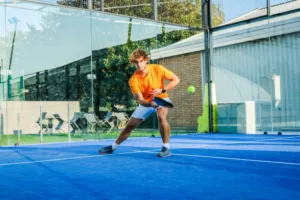
This integrated approach means the learner acquires technical skills, like a strong defensive lob or a controlled net volley, not as abstract movements, but as necessary solutions to solve immediate, challenging game problems.
Core Principles of the Padel Game-Based Methodology
The effectiveness of adult beginner padel game-based training is rooted in key principles that prioritize tactical awareness over pure technique, especially in the initial stages of learning.
- Tactical Awareness Leads Technique
In padel, controlling the net is the most important tactical objective. The padel game-based methodology focuses on helping players understand the essential flow of the point:
- Net Dominance: Training sessions prioritize drills simulating the approach to the net, maintaining aggressive net position, and applying pressure.
- Key Shots as Tools: Instead of practicing a bandeja as a movement, it is practiced as the tactical tool used when opponents execute a defensive lob that forces you off the net. This contextual learning is crucial.
2. Learning Through Constraints
Effective padel adult progression tips often involve the use of constraints in practice. These are rule modifications in a drill that simplify the game momentarily, forcing the player to focus on a single, necessary skill.
For example, a coach might set up a drill where players can only score points if they hit the ball off the back glass wall first. This constraint forces the adult beginner to immediately develop the crucial, difficult skill of reading and handling the wall, turning a challenging situation into a focused learning opportunity.
3. Functional and Contextual Feedback
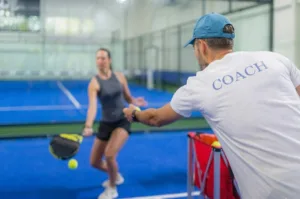
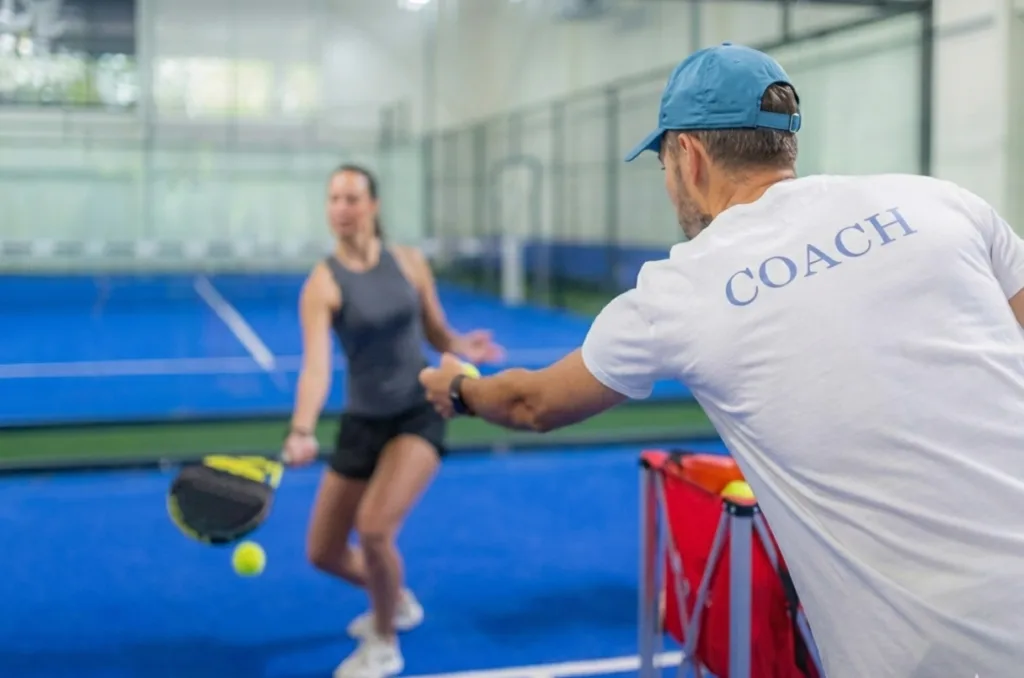
In the padel game-based methodology, feedback is always linked to the point’s outcome. When a mistake occurs, the coach can provide integrated feedback:
“You missed that shot because your contact point was too low (technical error). However, the reason your contact point was low was because you didn’t move forward to cut the angle, allowing the ball to drop (tactical error).”
This immediate connection between technical fault and tactical consequence helps the learner internalize the correction faster, significantly improving the padel learning curve.
Practical Application: Padel Fun Drills for Rapid Progress
Practice sessions focused on adult beginner padel game-based training spend minimal time on stationary drills and maximize time on realistic, moving point play.
Examples of Effective Game-Based Drills
These padel fun drills simulate match pressure and movement, essential for mastering the sport:
Drill Name | Primary Objective | Key Skill Developed |
The 3-Volley Game | Winning the net quickly and maintaining position. | Rapid forward movement, controlled punch volleys, and partner coverage. |
Deep Defensive Reset | Handling high lobs and recovering net position after being pushed back. | Consistent defensive lobs for point reset, and the footwork required to run back and forward. |
The Serve/Return Battle | Focuses solely on the first four shots of the rally (serve, return, third shot, fourth shot). | Emphasizes the crucial importance of a quality return and the following volley to win initial net control. |
Side-Out Simulation | Play a point where one team can only score if they hit the ball into the left-side wall. | Teaches players to direct the ball purposefully toward the opponent’s weaknesses and control the angles. |
The Benefit of Group Padel Adult Class Miami Sessions
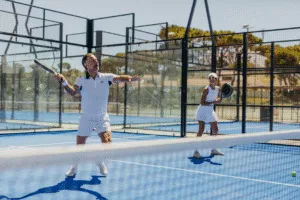
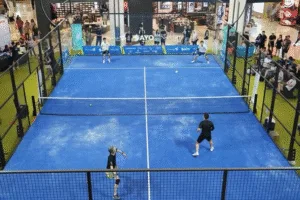
While individual instruction has its place, group training is often superior for the padel game-based methodology. Playing with peers in a structured padel adult class Miami environment automatically introduces the complexities of doubles play: communication, rotating roles, and covering deep angles.
A group setting, such as those offered by training programs at facilities like Urban Padel US, provides the ideal atmosphere to apply padel fun drills under light competitive pressure, which is far more beneficial than practicing technique in isolation.
Accelerating the Padel Learning Curve
The true power of adult beginner padel game-based training is its ability to transition skills from conscious thought to automatic execution, a process known as automation.
1. Building Automaticity
When learning, the brain is slow, consciously processing grip, swing, and timing. By placing the player in a game situation, their conscious attention is diverted to the goal (e.g., getting the ball deep into the opponent’s corner). The repeated, necessary movements (the technical shot) become internalized and automated much faster.
Once a player can hit a defensive lob without consciously thinking about the swing, they free up mental bandwidth for the far more important task of tactical decision-making. This is a crucial padel adult progression tips component.
- Mastering Tactical Intelligence
Padel is defined by fast, complex decision-making:
- Should I hit the ball before or after the side glass?
- Should I use the Víbora (offensive spin) or the Bandeja (slice for depth)?
- Which opponent is the weaker target for my attack?
The padel game-based methodology forces continuous practice of these choices under pressure, turning hesitant beginners into tactically intelligent players who can anticipate and control the rally flow. This intellectual challenge is what makes the sport so rewarding.
Final Thought
The adult beginner padel game-based training method is a highly effective and engaging way to master the sport. By combining technical skills with real match scenarios, this approach transforms learning from a repetitive task into an exciting challenge. Players focus on strategic thinking and decision-making, understanding the “why” behind each move rather than just perfecting individual techniques. This not only makes training more enjoyable but also accelerates your ability to play competitively.
If you’re serious about advancing your skills, the game-based methodology is the fastest path to success. It allows you to immediately apply what you’ve learned in real game situations, helping you improve net control, positioning, and tactical decision-making. For those looking to take their game to the next level, explore our training programs that emphasize this play-focused approach. Contact us today to find out more about our specialized classes at Urban Padel US and start your journey toward mastering padel.
Frequently Asked Questions
Is the padel game-based methodology suitable for someone new to racket sports?
Yes. Beginners without prior habits adapt quickly to padel’s tactical focus, especially learning walls and net control early. This method accelerates progress through immediate, realistic play.
How many times per week should I train for fast improvement?
Training two to three times per week is ideal. One structured session plus one or two match-play sessions helps build skills quickly through repetition and real-game experience.
What tactical mistake does game-based training fix most often?
The biggest issue is failing to hold the net. Game-based drills teach players to move forward, stay aggressive, and maintain net dominance to control points.
Why do coaches emphasize controlled power instead of raw strength?
Padel courts are small with glass walls, so uncontrolled power often backfires. Controlled depth and placement create pressure and force errors, making them more effective than hitting hard.
How long does it take for an adult beginner to feel confident in matches?
Most adults begin feeling confident within 6–8 weeks with consistent practice. Game-based training speeds this up by focusing on real match situations, helping players make smarter decisions earlier.